Camp Like a Chaos Wizard Without Losing Your Tent or Your Mind
Master multi-day festival camping with survival tips that keep your tent, gear, and sanity intact—chaos-proof hacks for a legendary, stress-free stay.
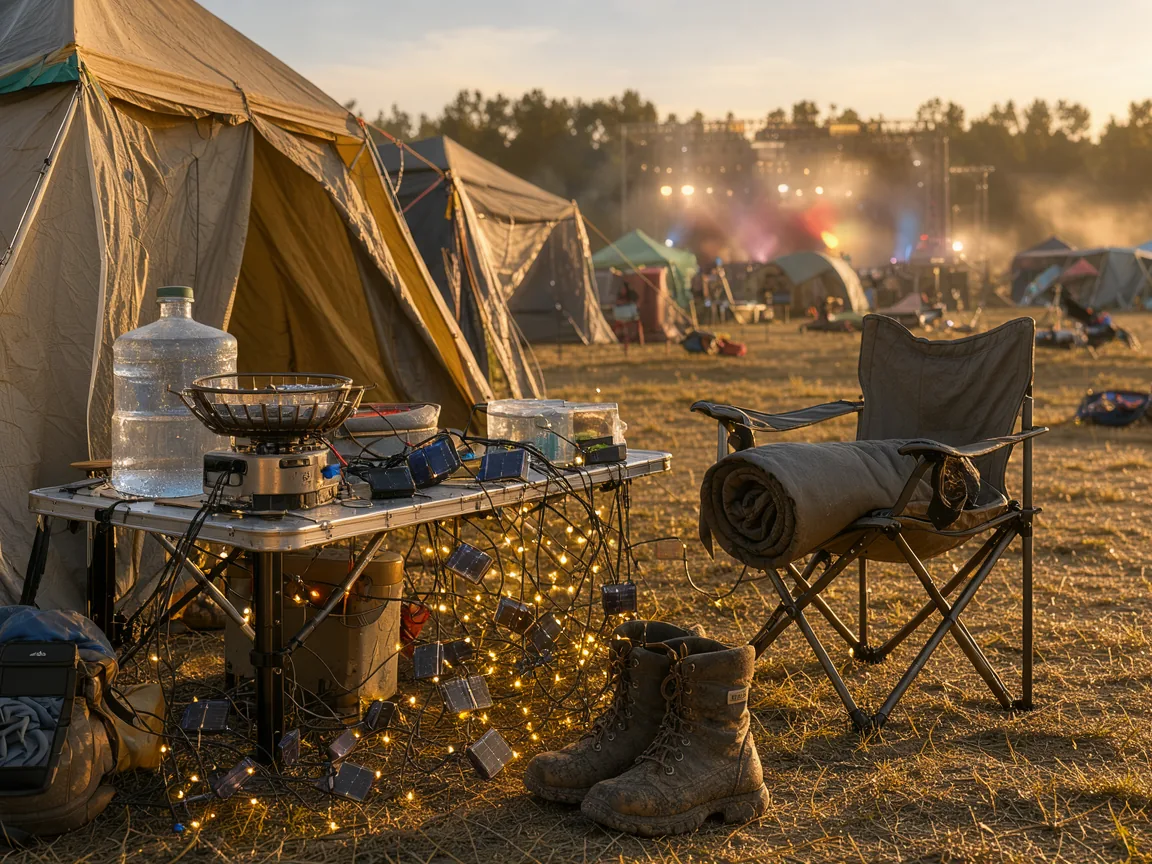
Camping at a multi-day music festival is a glorious experiment in controlled chaos. Your tent is both sanctuary and betrayer. To camp like a chaos wizard—without losing your tent or your mind—you need more than “hope for the best” and “pack a hoodie.” This guide hands you the practical incantations: staking your kingdom against rogue winds, befriending neighbors before they morph into a drum circle. Dance till dawn, still find your sleeping bag. Think of it as surviving a small, loud, glitter-soaked apocalypse with your dignity—and your tent pegs—intact. By the end, you’ll be the calm eye of the festival storm, ready for anything except maybe that one guy with the flaming hula hoop.
What to Pack for Festival Camping Without Packing Your Whole House
Packing for a multi-day music festival is a delicate balance between “I might need this” and “why did I bring four pairs of jeans?” The goal is to arrive with everything that keeps you fed, dry, and vaguely human—without needing a second car just for your pillow collection. Think of it as preparing for a weekend-long nap in a field where the neighbors occasionally play drums at 3 a.m. Survival, not luxury, is the name of the game.
The Tent, the Tarp, and the Fine Art of Not Sleeping in a Puddle
Your tent is your castle, but castles need moats—and in this case, the moat is a ground tarp. Before you pitch, lay down a tarp slightly smaller than your tent’s footprint. If it sticks out, rain will run under it and pool beneath you like a personal swimming pool you never asked for. Tuck the edges under the tent floor, and you’ll wake up dry instead of feeling like a sponge that learned to snore.
Now, the tent itself: practice setting it up once at home, not in the dark while slightly dizzy and surrounded by strangers. Bring a spare set of tent pegs because the ground at festivals is often either concrete-hard or suspiciously sandy. And always, always stake down the rainfly—even if the sky looks clear. Festival weather has a sense of humor, and it loves surprising people who thought they could skip the fly. If you can, bring a small tarp to rig as a shaded porch over your entrance. That little awning is the difference between a cool refuge and a sauna with zippers.
Layers, Layers, Layers: Dressing Like an Onion So You Don’t Cry
The temperature at a festival swings more than the bass drops. Mornings can be crisp enough to see your breath, afternoons hot enough to fry an egg on your tent, and nights cold enough that you’ll consider befriending a stranger just for their body heat. The solution is simple: dress in layers you can peel off and pile on with zero effort. Think thin base layer, a mid-layer like a hoodie, and a waterproof outer shell. Avoid cotton like it’s a scam—it soaks up sweat and stays cold against your skin. Go for synthetic or wool, even if it makes you feel like a hiking billboard.
A good hat and sunglasses are non-negotiable, as is a bandana or buff you can wet and wrap around your neck when the sun gets personal. For your feet, bring two pairs of broken-in shoes—you’ll rotate them daily to let each pair air out. And pack a warm beanie and gloves, even if you’re headed somewhere “warm.” Nighttime festival air has a way of sneaking through your hoodie like it’s got a personal vendetta. Remember: you’re not dressing for the weather you want; you’re dressing for the weather that will laugh at your plans.
The Snack Stash and the Camp Stove: Saving Money and Your Sanity
Festival food is glorious, but it’s also priced like it was flown in from another planet. A single crepe can cost more than your tent. That’s why a small snack stash is your financial lifeline. Pack shelf-stable items that don’t require refrigeration and give you quick energy. Here’s a starter list that won’t melt, crush, or betray you:
- Peanut butter or almond butter sachets (no jar, no mess)
- Tortillas and a small jar of honey or jam
- Instant oatmeal packets and dried fruit
- Nuts, trail mix, and granola bars
- Instant coffee or tea bags (non-negotiable for morning survival)
For hot meals, a small camp stove—the kind that fits in a backpack—is a game changer. You’ll spend from €25 to €60 for a decent single-burner stove with a fuel canister, and it pays for itself after two festival meals. Boil water for noodles, soups, or just to make a cup of tea that tastes like victory. Cook in the morning while the site is quiet, and you’ll feel like a wizard who conjured breakfast from a metal box. Just remember to cook away from tents and always let the stove cool before packing it—fire safety isn’t a joke, even if your camp setup is. A hot meal and a full stomach will keep you sane when the portaloos are queueing and the bass is still thumping at sunrise.
How to Choose the Best Campsite Spot Like a Pro (or at Least Not Like a Newbie)
Let’s be honest: your tent is basically a glorified nylon sleeping bag with ambitions, and the ground it sits on will decide whether you spend the weekend blissfully horizontal or curled in a fetal position wondering why you paid for this. Choosing a campsite at a multi-day festival isn’t about scoring a postcard view—it’s about dodging the three horsemen of the camping apocalypse: sun, slope, and surprise floods. You don’t need a PhD in topography, just a bit of foresight and a willingness to haul your cooler an extra hundred meters. Think of it as a tiny investment in future-you’s spine.
Early Bird Gets the Grass: Arriving Early for Prime Real Estate
The golden rule of festival camping is simple: the early bird gets the grass, and the late bird gets the gravel patch next to the port-a-potties. Arriving when gates open—or better yet, the night before if the festival allows—means you have first dibs on the flat, shaded, and dry spots that everyone else will fight over by Friday afternoon. It’s a real estate auction where your currency is patience and your bid is a 6 a.m. alarm clock. You’ll be tired, sure, but you’ll be tired on a nice patch of lawn, which is a vastly superior form of exhaustion.
When you roll in early, don’t just grab the first open field you see. Walk the perimeter, check for high ground (because rain happens, and you’re not a duck), and look for natural windbreaks like trees or hedges—just not directly under a tree, because birds and falling branches have zero respect for your tarp. Also, scout the festival’s main paths and stage locations, then pick a spot that’s close enough to walk but far enough that you won’t hear the bass drop at 3 a.m. as if it’s a personal invitation. Early arrival also gives you time to stake your claim properly, set up your tent while sober, and mark your territory with a cheap string of solar lights—nothing says “this is mine” like a glowing perimeter fence.
If you can’t arrive early, don’t despair. You can still salvage a decent spot by heading to the edges of the camping area, where most people are too lazy to walk. The trade-off is a longer trek to the festival entrance, but you’ll gain peace, quiet, and a much lower chance of someone tripping over your guy lines at midnight. Remember: a prime spot isn’t about being central—it’s about being sane.
Zone Logic: Distance vs. Noise, and Why You Can’t Have Both
Here’s the brutal truth of festival camping: you can’t have it all. Camp next to the main stage, and you’ll get zero sleep plus a front-row seat to the 9 a.m. soundcheck. Camp in the far back, and you’ll enjoy perfect silence but a 25-minute hike every time you need a snack or a toilet. This is zone logic, and it’s a balancing act between your ears and your legs. Ask yourself one question: what do I value more—my ability to nap or my ability to stumble back to my tent in under five minutes? There’s no wrong answer, but there is a very wrong answer if you pick the spot next to the generator.
To help you decide, here’s a quick cheat sheet on the main camping zones you’ll encounter at most multi-day festivals. Use it as a rough guide, but always adapt to the actual layout—and never trust a map that shows “quiet camping” next to the drum circle.
| Zone | Distance to Stages | Noise Level | Best For | Watch Out For |
|---|---|---|---|---|
| VIP / Glamping | Short | Low–Medium | People who like real beds | Pricey, often sold out |
| Family / Quiet | Medium–Long | Low | Sleepers, parents | Early mornings, rules |
| General (Central) | Medium | High | Social butterflies | Crowds, late-night chatting |
| General (Edge) | Long | Medium | Introverts, light sleepers | Long walks, less vibe |
| Car Camping (If offered) | Variable | Medium | People who love their trunk | Strict space rules, heat |
Once you pick a zone, commit. The biggest mistake newbies make is trying to optimize mid-festival, which means you’ll end up dragging your tent at 2 a.m. while your neighbors give you the “please don’t” eyes. Instead, go for a spot that’s slightly farther from the action than you think you need. You can always walk faster, but you can’t make your tent quieter. And if you do choose the central zone for the social scene, pack earplugs—not as a suggestion, but as a survival essential.
Neighborly Negotiations: Making Friends Without Making Enemies
Your campsite neighbors aren’t just people—they’re your temporary roommates, your emergency snack suppliers, and potentially your best friends for four days. But they can also be your downfall if you ignore the unspoken rules of festival etiquette. The first rule is simple: claim your space clearly, but don’t over-claim. A tent, a small canopy, and maybe a chair’s worth of space is polite. A full perimeter fence with a moat is not. When you arrive, introduce yourself with a smile and a quick “hey, we’re over here, shout if you need anything”—this sets a friendly tone without making you the neighborhood weirdo who talks too much.
The second rule is about sound and light. Your neighbors will likely have different sleep schedules than you—some will party till sunrise, others will wake up at 7 a.m. to meditate. The trick is to negotiate a truce on day one: agree on a “quiet hours” window (even if it’s just from 2 a.m. to 8 a.m.) and stick to it. If you’re the night owl, keep your music low and your conversations hushed after midnight. If you’re the early riser, do your zipper-opening and coffee-making quietly, and don’t shine your headlamp into someone’s tent. A little compromise goes a long way, and it’s way better than a passive-aggressive note taped to your cooler.
Finally, share generously. Offer extra water, a spare battery pack, or a splash of hot sauce when you see someone struggling. This isn’t just kindness—it’s insurance. The person you help on day one might be the one who gives you a Tylenol on day three when the sun is trying to melt your brain. And if a neighbor is being genuinely annoying—like blasting dubstep at 4 a.m.—talk to them calmly first. If that fails, move your tent slightly away or talk to festival staff. Remember, you’re all here for the music, not for a camping feud. A little grace, a few shared laughs, and a mutual respect for personal space will turn a random patch of grass into a home base you’ll actually miss.
Survival Tips for Festival Camping: Sleep, Toilets, and Other Necessities
Camping at a multi-day music festival is basically enrolling in a chaos wizardry course. You get magical moments, unexpected weather, and a few spells that backfire spectacularly. The line between a legendary weekend and a Sunday meltdown? It usually comes down to three boring things—sleep, toilets, and water. Nail those, and you’ll stumble out of the dust or mud looking like a seasoned conjurer instead of a damp, cranky goblin.
Mastering the Art of Sleep in a Noisy, Bright, and Slightly Chaotic World
Sleeping at a festival isn’t about closing your eyes. It’s about building a fortress of sensory denial. Picture your tent as a fragile paper castle, and that 2 a.m. bass drop as a siege catapult. Your first defense is a quality eye mask—not the flimsy airplane kind, but one that blocks the sun, the neighbor’s string lights, and the existential glow of someone’s phone screen. Pair it with earplugs that actually fit. Foam ones, rolled and inserted properly, can shrink a drum circle to a gentle heartbeat.
Temperature control is the real secret weapon, though. Festival nights swing from oven to fridge faster than a DJ changes BPM. Bring a lightweight sleeping bag rated for cooler weather, but also pack a thin cotton sheet for that inevitable 4 a.m. sweat. A small inflatable pillow beats a rolled-up hoodie—though the hoodie works in a pinch. Before settling in, do a quick “tent audit.” Check for rocks, unclip any noisy zipper pulls, and stuff your backpack at the foot of your sleeping pad to stop sliding downhill. One final trick: set a phone alarm for sunrise. But only if you enjoy waking up in a sauna. Otherwise, embrace the chaos and nap when the sun gets too loud.
The Portable Toilet Survival Guide: Bring Your Own Paper and a Flashlight
Festival toilets are less “restroom” and more “unscripted performance art.” The queues stretch, the smells become legendary, and the mystery puddles—let’s not. Your mission is to minimize contact and maximize dignity. First rule: never enter a porta-potty without a headlamp or flashlight. The darkness hides everything, and you want to see exactly what you’re avoiding. Second rule: always carry your own toilet paper and hand sanitizer. The dispensers are either empty or mysteriously damp. A small zip-lock bag with a half-roll of TP and a mini sanitizer bottle fits in your pocket and can rescue your entire day.
Timing is everything. Go during headline sets when queues evaporate, or at dawn when the crowd is asleep and the toilets are fresher. Camping with friends? Set up a “toilet buddy” system for late-night trips—safety in numbers, plus someone to hold the flashlight. And if you’re truly unlucky, remember the golden rule: hover, but don’t squat. The floor is not your friend. For emergencies, pack a small bottle of biodegradable wipes and a plastic bag to pack out any rubbish. Leave no trace, even in the chaos. This is survival, not luxury, but with a little prep, you’ll walk out feeling like a hero, not a hazard.
Hydration Station: Water Refills and Why Your Bottle Is Your Best Friend
Dehydration at a festival sneaks up like a pickpocket. You don’t feel it until you’re dizzy, cranky, and paying €6 for a lukewarm can of soda. Your water bottle is your loyal sidekick, your hydration knight. Bring a sturdy, reusable one (1-liter or larger) and fill it at every free refill station you pass. Most festivals have them near the main stages or info points. Look for long lines of people clutching empty bottles—that’s your goldmine. If the tap water tastes like a swimming pool, drop in a flavor tablet or electrolyte powder to keep yourself drinking.
A smart routine: drink a full bottle before every set, then refill immediately after. That keeps you ahead of the heat and the dancing. For campsite hydration, bring a collapsible jug (5–10 liters) to avoid trekking to the station at midnight. And don’t rely on beer or energy drinks—they’re diuretics, not hydrators. A good rule of thumb is to alternate every alcoholic drink with a water chaser. Forget that, and you’ll learn quickly when your legs feel like jelly during the encore. Keep your bottle clipped to your bag or belt loop, and you’ll never lose it. It’s the cheapest insurance policy you’ll buy all weekend.
The best festival survival tip is simple: treat your water bottle like your phone—never leave it behind, and always know where the nearest charging point is.
- Fill up at every refill station, even if you’re not thirsty yet.
- Use a carabiner to clip your bottle to your backpack strap.
- Freeze a half-full bottle the night before—it doubles as a cold pack and melts into drinking water.
How to Keep Your Stuff Safe and Your Campfire Legal at a Festival
Let’s be honest: most of us arrive at a multi-day music festival with the organizational skills of a raccoon on espresso. You’ve packed the tent, the glow sticks, and a questionable amount of instant noodles. But have you thought about how to keep your valuables from walking off with a stranger who smells like sandalwood and bad decisions? Or whether your “romantic campfire” is actually a felony in three counties? Fear not, chaos wizard. This survival guide will keep your gear where you left it and your flames where they belong.
Valuables 101: Lock It, Hide It, or Say Goodbye to It
Your phone, wallet, and keys are the holy trinity of festival survival. Leave them on a picnic table “just for a second,” and they’ll vanish faster than a DJ’s setlist. The golden rule is simple: never store anything you’d cry over in a tent you can open with a gentle cough. Festival thieves aren’t masterminds; they’re opportunists who check for unzipped flaps and trusting souls. So make their job miserable.
Invest in a small padlock for your tent zippers. But understand this: a lock is a deterrent, not a fortress—anyone with a box cutter can bypass it. The real trick is layering. Keep your phone and cash in a hidden waist pouch or a “neck wallet” that lives under your shirt, not in your backpack’s outer pocket where a pickpocket can unclip it while you’re vibing to the bass drop. For larger items like a laptop or a spare camera, lock them in your car’s trunk before entering the festival grounds, and only retrieve them when absolutely necessary. And never, ever leave a backpack unattended at a stage—even for thirty seconds. That’s how you end up watching the sunset with only a half-empty water bottle and a profound sense of loss.
Fire Rules and Glass Bans: What the Festival Didn’t Tell You (But Should Have)
Here’s the thing nobody reads in the fine print: festivals love to ban glass and open flames, but they rarely explain why until security is confiscating your prized jar of pickles or your “portable” fire pit. Glass breaks, and barefoot hippies plus shattered bottles equals a medical tent visit and a permanent ban from the vibe. Fire is even more serious—a stray spark in a dry field can turn a weekend of love into a wildfire evacuation. So respect the rules, but also plan around them.
Before you pack, check the festival’s specific fire policy. Most allow small, raised propane stoves for cooking but forbid ground fires, charcoal, or anything that touches the grass. If you’re desperate for a flame, bring a portable propane fire pit that sits at least a foot off the ground, and always have a bucket of water or a fire extinguisher within arm’s reach. For drinks, ditch the glass entirely and transfer your beverages into reusable aluminum or stainless steel bottles. And here’s a pro tip for cooking without fire drama:
- Use a compact butane stove with a windscreen—it boils water in minutes and folds down to the size of a sandwich.
- Pre-cook meals at home and vacuum-seal them; just reheat in a pot, no open flame needed.
- If you must bring glass (e.g., hot sauce), transfer it to a plastic squeeze bottle before leaving, and label it with a Sharpie so you don’t accidentally drink hot sauce at 2 a.m.
Theft-Proof Your Tent: Simple Tricks That Actually Work
Your tent is not a safe, a vault, or even a particularly sturdy cardboard box. It’s a nylon shell with a zipper, and that’s the first thing you need to accept. But you can make it a very annoying target. Start by choosing a campsite near other tents and with good sightlines to the main path—thieves hate an audience. Then, get creative with decoys.
Leave a cheap, empty wallet with a few expired gift cards in your tent’s outer pocket. It’s the perfect sacrifice: a thief will grab it, think they’ve hit the jackpot, and vanish before checking your real stash. Meanwhile, your actual valuables go in a dry bag that you bury under your sleeping bag, or better yet, inside a sealed food container that looks like yesterday’s leftovers. Nobody steals a Tupperware of what they think is cold chili. Also, use a carabiner to clip your tent’s main zippers together from the inside when you’re sleeping—it’s not foolproof, but it slows down anyone trying to sneak in silently. And never, ever store your keys or phone in the tent’s mesh pocket near the door; that’s the first place a hand reaches.
The best theft deterrent is not a better lock—it’s looking like you own nothing worth stealing.
Finally, make friends with your neighbors. A quick “hey, can you watch my stuff for ten minutes while I hit the port-a-potty?” goes a long way. Festivals are communities, and a shared watch system means you can dance without a paranoid death-grip on your backpack. You came for the music, not to become a security consultant. So lock the basics, hide the rest, and let the chaos be musical, not logistical.
The Glorious Aftermath of Controlled Chaos
And there you have it—the survival guide to a multi-day festival without your tent turning into abstract art or your sanity booking a one-way ticket out of town. The takeaway? Chaos is coming. But you can be the calm, slightly smug eye of that storm. Think of your campsite as a beloved, mildly intoxicated pet: give it structure, feed it snacks, and keep it from wandering into traffic. Before you toss in that glittery onesie, run a five-minute “tent tetris” check—stakes, guylines, and a headlamp that actually works. Future-you will be too exhausted to forgive past-you otherwise. And here’s the thing about these survival tips for camping at a multi-day music festival: the real magic happens when your neighbor’s inflatable flamingo deflates at 3 a.m., and you both just laugh, realizing you’re in this gloriously ridiculous mess together. So go forth, pitch your palace of questionable stability, and dance like nobody’s watching—but camp like everybody’s judging.
Frequently asked questions
How much water should I actually bring to a multi-day festival?
Bring at least one gallon (about 4 liters) per person per day, plus a little extra for washing your face and pretending you’re a civilized human. If you run out, you’ll be the person paying $8 to $12 for a tiny bottle of lukewarm regret at the vendor tent.
What's the best way to keep my tent from becoming a swamp sauna by 8 a.m.?
Set up your tent in the shade if you can, and crack the vents or door slightly for airflow—think of it as giving your tent a tiny armpit to breathe. Also, bring a light-colored sheet to drape over the top; it’s like a sun hat for your home, and it can drop the inside temperature by 5 to 10 degrees.
How do I protect my valuables from theft without carrying a safe?
Never leave anything you’d cry about in your tent; instead, wear a small cross-body bag or a money belt that stays on you even when you’re dancing like a malfunctioning robot. For things like passports or extra cash, lock them in your car’s trunk (if you have one) or use a cheap combination lock on your backpack—thieves are lazy, and a tiny bit of friction sends them to the next tent.
What's the golden rule for festival bathrooms that everyone forgets?
Go before you need to go, especially in the morning and right after headliners end—the lines are shorter and the floors are less like a crime scene. Pack your own toilet paper and hand sanitizer in a pocket you can reach without undoing your pants, because the provided stuff runs out faster than a rumor about the bassist.
How do I keep my phone alive for four days without a power outlet?
Bring a high-capacity power bank (20,000 mAh or more) and charge it fully before you leave—that’ll give you 3 to 5 full phone charges, enough for photos, maps, and the occasional ‘where are you?’ text. Also, put your phone on airplane mode when you’re not using it; it’s like giving your battery a nap, and you’ll thank yourself when you’re still snapping pics at the final set.
What should I eat to avoid the dreaded festival food coma?
Pack shelf-stable snacks like nuts, dried fruit, peanut butter packets, and granola bars—they’re the difference between a 2 p.m. energy crash and a triumphant dance-off. For hot meals, bring a small camp stove (if allowed) or rely on the food trucks, but budget $12 to $20 per meal and always eat something with protein before the evening sets, or you’ll be the one asleep on a stranger’s picnic blanket.
How do I handle the weather when it goes from scorching to freezing in one day?
Layer like you’re an onion with anxiety: a moisture-wicking base, a fleece mid-layer, and a waterproof shell that can double as a windbreaker. Bring a beanie and gloves even in summer—festival nights have a way of turning into a polar expedition, and you’ll be the hero who shares their extra hoodie.
What's the smartest way to find my tent after a night of wandering?
Tie a brightly colored flag, a balloon, or a glowing LED lantern to a tall pole or your tent’s rainfly—anything that stands out from the sea of identical nylon. Also, take a photo of your tent’s location with a landmark (like ’third porta-potty from the left’) before dark, because your drunk brain will not remember ’the one near the big tree'.
How do I keep my camping neighbors from hating me by Sunday?
Respect quiet hours (usually 10 p.m. to 8 a.m.) by using headphones for late-night jams and keeping your campfire chatter at library volume. Also, don’t let your tent’s guy lines become tripwires for their midnight bathroom runs—mark them with glow sticks or tape, and you’ll be the neighbor they share bacon with, not the one they curse.
What's the single most important item for festival survival that everyone forgets?
Earplugs—not just for sleeping through the 4 a.m. drum circle, but for protecting your hearing during loud sets; they cost $2 to $15 and can save you from a lifetime of ‘WHAT?’ at dinner parties. Second place goes to a headlamp, because trying to pee in a dark port-a-potty without one is a horror movie you don’t want to star in.